Read Time: 8 min
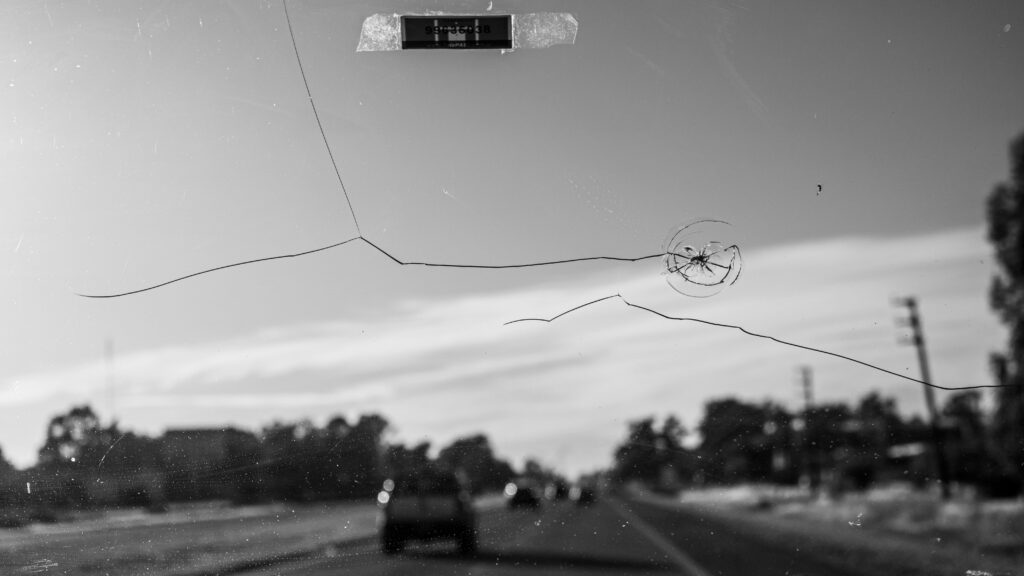
A tiny pebble kicked up by a truck on Route 501 or the Pennsylvania Turnpike can instantly ruin your drive. It starts with a sharp crack, followed by the immediate appearance of a chip or starburst fracture on your windshield.
For many drivers in Lancaster County, a damaged windshield brings immediate stress. You might worry about the cost, the time your car will spend in the shop, or whether your vehicle will fail its next Pennsylvania state safety inspection. However, a chipped or cracked windshield does not always mean you need a complete replacement. Knowing the difference between a simple repair and a full replacement can save you hundreds of dollars and hours of downtime. Use our free photo estimate tool to get an idea of the extent of the damage from the comfort of your home.
At Lititz Collision, we believe that transparency is the foundation of trust. For 50 years, beginning as Roy’s Body Shop in 1976 and continuing today under Barry Burkholder’s modernized leadership, our shop has served the Lititz, Ephrata, Lebanon, and Lancaster communities. We want our neighbors to “feel the difference” when they get back behind the wheel. In this guide, we will break down the exact rules of size, location, and depth that dictate whether your glass can be saved, how Pennsylvania state laws impact your vehicle, and what modern safety technology means for windshield replacements.
TL;DR / Quick Summary
A chipped or cracked windshield does not always require a full replacement; understanding the size, location, and depth of the damage can save you time and money while keeping your vehicle safe and street-legal.
Key Takeaways:
- The Size Rule: Chips smaller than a quarter and cracks under six inches can typically be repaired.
- Location Matters: Damage in the driver’s direct line of vision or along the windshield edge requires full replacement.
- PA Inspection Laws: Pennsylvania safety inspections strictly prohibit cracks or chips that obstruct the driver’s view.
- ADAS Recalibration: Modern vehicles with safety cameras require precise sensor recalibration after a windshield replacement.
- Insurance Coverage: Most comprehensive insurance policies cover windshield repairs with a zero-dollar deductible.
The Three Golden Rules: Size, Location, and Depth
When you bring your vehicle to our shop on Furnace Hills Pike, our certified technicians evaluate the glass damage using three primary criteria to determine if a repair is safe, or if a replacement is
mandatory.
1. Size of the Damage
As a general rule of thumb, most individual chips and bullseye fractures can be successfully repaired if they are smaller than a quarter (about 1 inch in diameter). Cracks can often be repaired if they are shorter than six inches—roughly the length of a dollar bill. If a crack has spiderwebbed across the glass or exceeds six inches, the structural integrity of the windshield is compromised, and it must be replaced.
2. Location of the Damage
Even a tiny chip must be replaced rather than repaired if it falls in certain critical zones:
- Driver’s Line of Vision: Repairs do not cure 100% invisible. They leave a slight cosmetic blemish or distortion. If this distortion is directly in your line of sight, it creates a safety hazard, especially during night driving or heavy rain.
- The Outer Edge: If a crack or chip is within two inches of the outer edge of the windshield, it weakens the bond between the glass and the vehicle frame. Because the windshield serves as a vital structural component of your vehicle’s cabin, helping to support the roof and maintain cabin integrity in the event of an accident, any edge damage severely compromises this essential safety barrier.
3. Depth of the Damage
A windshield is a sandwich of safety: two layers of glass pressing against a middle layer of polyvinyl butyral (PVB) plastic. If a rock penetrates both the outer glass layer and the inner plastic interlayer, a repair is no longer possible. The structural bond is broken, and a full replacement is required to keep you safe.
Pennsylvania State Inspection Rules for Windshield Damage
In Pennsylvania, annual safety inspections are rigorous. Under the Pennsylvania Department of Transportation (PennDOT) vehicle equipment standards, windshield damage is a frequent cause of inspection failure.
According to PennDOT safety inspection regulations, a vehicle will fail inspection if:
- There is any crack, chip, or discoloration in the “acute area” (the section of the windshield directly in front of the driver, measuring 8.5 inches wide by 5.5 inches high).
- There are cracks or chips that interfere with the driver’s vision or the proper operation of the windshield wipers.
- The glass is shattered, severely pitted, or has loose, sharp edges.
Addressing a small chip early not only prevents it from spreading into a massive crack during Lancaster’s freezing winters or humid summers, but it also ensures your vehicle remains fully street-legal and ready to pass inspection without delay.
Modern Windshields & The ADAS Recalibration Requirement
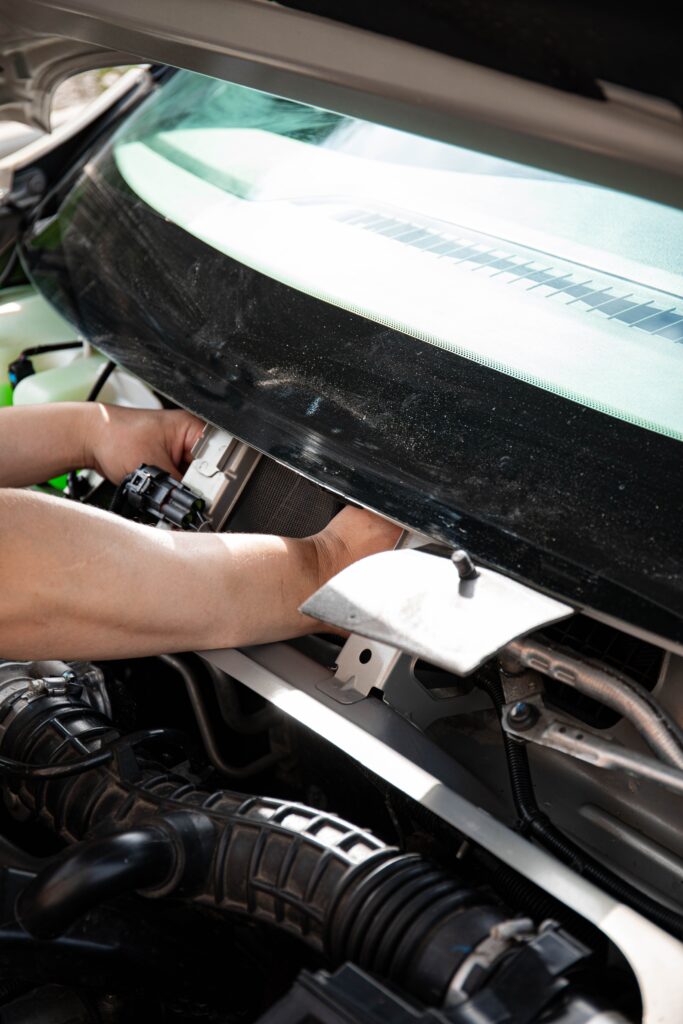
If your vehicle was manufactured in the last decade, your windshield is no longer just a piece of glass. It is a highly sophisticated tech hub.
Modern vehicles rely on Advanced Driver Assistance Systems (ADAS). These systems use cameras, radar, and sensors mounted directly behind your rearview mirror to power critical safety features, including:
- Lane Departure Warning & Lane Keep Assist
- Automatic Emergency Braking
- Adaptive Cruise Control
- Rain-Sensing Windshield Wipers
When a windshield is replaced, the forward-facing camera must be physically removed and reinstalled onto the new glass. Even a microscopic misalignment of just one millimeter can throw off the camera’s field of view by several feet down the road. This can cause your safety systems to miscalculate distances, fail to detect obstacles, or trigger emergency braking unexpectedly.
At Lititz Collision, we perform precise ADAS camera recalibration following every windshield replacement. Using specialized diagnostic software and targeting equipment, we reset the camera to exact factory specifications, ensuring your vehicle’s safety systems protect you exactly as the manufacturer intended.
What You Can Handle vs. When to Call a Pro
While auto parts stores sell DIY windshield repair kits, attempting to fix glass damage yourself carries significant risks.
Tasks Most Drivers Can Do
- Temporary Protection: If you get a small chip, place a piece of clear packing tape over the damage immediately. This prevents dirt, moisture, and windshield washer fluid from embedding in the chip, which makes a professional repair much cleaner and more successful.
- Wiper Replacement: Regularly replacing worn-out wiper blades prevents metal arms from scratching the glass surface.
When to Call a Professional
- Any Active Chip or Crack: Professional resin injection requires vacuum pressure to draw air out of the fracture and force specialized, optically clear resin in. DIY kits lack the pressure required to achieve a structural, long-lasting bond.
- Edge Cracks or Large Stars: Any damage near the perimeter of the glass or larger than a quarter requires immediate professional assessment.
- Vehicles with ADAS Cameras: If your car has a camera mounted behind the rearview mirror, a professional replacement and subsequent recalibration are non-negotiable for your safety.
Common Auto Glass Mistakes to Avoid
1. Waiting Too Long to Repair a Chip
What people do wrong: Ignoring a small chip because it is out of the direct line of sight.
Why it’s a problem: Temperature changes, road vibrations, and hitting a pothole on local roads can cause a tiny chip to instantly “spider” into a massive crack across the entire windshield.
The right approach: Get chips repaired immediately. A quick, inexpensive 30-minute repair can prevent the need for a costly, full windshield replacement later.
2. Using Hot Water to De-Ice a Windshield
What people do wrong: Pouring warm or hot water onto a frozen windshield in the winter to melt ice quickly.
Why it’s a problem: The extreme thermal shock causes the glass to expand rapidly, which will instantly shatter or crack the windshield, especially if a microscopic chip was already present.
The right approach: Use your vehicle’s defroster, a plastic ice scraper, or a specialized commercial de-icing spray.
How Insurance Handles Glass Claims
Many drivers hesitate to address windshield damage because they worry about out-of-pocket costs. However, if you carry comprehensive insurance coverage, the process is often incredibly simple and inexpensive.
Because insurance companies know that a simple chip repair is far cheaper than a full windshield replacement, most insurers will waive your deductible entirely for a glass repair. This means you can often get your windshield repaired at Lititz Collision with zero out-of-pocket cost to you.
If your windshield requires a full replacement, the work is covered under your comprehensive coverage, meaning you will only be responsible for your standard comprehensive deductible. Our team coordinates directly with major insurance providers, including State Farm, AAA, Allstate, Erie Insurance, and Nationwide, to handle the paperwork, file the claim, and get you back on the road seamlessly.
Conclusion
Your windshield is one of the most critical safety components of your vehicle, providing structural strength and housing the sensors that keep you safe on the road. Whether you have a minor chip that needs a quick resin repair or a modern windshield requiring full replacement and ADAS recalibration, the team at Lititz Collision is here to help.
We make the repair process seamless, affordable, and stress-free, working directly with your insurance provider and backing our workmanship with a lifetime warranty.
Serving Lititz, Ephrata, Lebanon, Lancaster, and surrounding Lancaster County areas.
Need Your Glass Assessed?
Do not wait for a small chip to turn into an expensive replacement. Contact our team today to schedule an inspection or to get help filing your insurance glass claim.
Phone: +1 (717) 627-3603
Email: info@lititzcollision.com
Address: 1313 Furnace Hills Pike, Lititz, PA 17543
Website: https://lititzcollision.com
Related Resources
- For any paint or body damage that came with your glass damage, Barry’s Paint Shop handles full collision and refinishing work.
Frequently Asked Questions
How long does a windshield repair take, and can I drive immediately after?
A professional windshield chip repair typically takes only 30 to 45 minutes. Because we use specialized ultraviolet light to cure the resin instantly, you can safely drive your vehicle immediately after the service is completed.
Will a windshield repair make the chip completely invisible?
While a professional repair restores the structural integrity of the glass and prevents the damage from spreading, it will not make the chip 100% invisible. You can expect a minor cosmetic blemish, which is why repairs are not recommended directly in the driver’s acute line of vision.
Can a cracked windshield fail a Pennsylvania state safety inspection?
Yes. Pennsylvania safety inspection regulations state that any crack, chip, or discoloration within the driver’s acute viewing area (directly in front of the steering wheel) or any damage that obstructs the driver’s clear view of the road will result in an immediate inspection failure.
What is the difference between static and dynamic ADAS recalibration?
Static recalibration is performed inside our specialized facility using physical target boards set at precise distances from the vehicle. Dynamic recalibration requires driving the vehicle on marked roads at specific speeds while connected to diagnostic equipment so the camera can map its surroundings. Some modern vehicles require both types of recalibration after a windshield replacement.
Is it safe to drive with a cracked windshield?
No, it is not safe. Beyond obstructing your vision, a cracked windshield has lost its structural integrity. In a front-end collision, the windshield helps direct the deployment of the passenger-side airbag; if the glass is cracked, the force of the airbag can cause the windshield to pop out, leaving passengers unprotected.
Sources
1. Pennsylvania Department of Transportation (PennDOT) — Official vehicle safety inspection regulations and glass standards.
2. Custom Collisions — Standards for auto glass replacement safety and structural integrity explained
3. Insurance Information Institute (III) — Guidelines on comprehensive auto insurance coverage and glass claim deductibles.