
Read Time: 10 min
Driving away from a collision repair shop with your vehicle restored to pre-accident condition is an immense relief. The body panels align seamlessly, fresh paint gleams under the sun, and the stress of the insurance claim is behind you.
However, many drivers do not realize that the first 30 days after collision repair represent the most critical window for your vehicle’s new finish and structural components. Proper post-repair vehicle maintenance in Lancaster, PA ensures your investment remains protected against harsh road elements, premature clear coat failure, and preventable wear.
Modern automotive repair blends precision frame alignment, advanced computerized calibrations, and multi-stage urethane refinishing. While your vehicle is completely roadworthy and safe to drive the moment you pick up your keys, fresh paint and newly installed components require specific care to guarantee long-term durability.
This practical guide breaks down exactly what to do after body shop repair, highlighting the crucial do’s and don’ts, essential warning signs to watch for, and how professional warranty coverage protects your vehicle for miles to come.
TL;DR / Quick Summary
The first month following collision repair requires gentle handling because fresh automotive paint continues to cure for 30 to 90 days after application.
Key Takeaways:
- Hand-wash only using cool water, mild car wash soap, and clean microfiber mitts.
- Avoid all automatic, drive-thru, and stiff-bristle car washes for at least 30 days to prevent scratching soft clear coat.
- Do not apply wax, paint sealant, or ceramic coatings for 60 to 90 days so solvents can evaporate naturally.
- Monitor your vehicle closely at highway speeds for steering pull, panel wind noise, and ADAS sensor warnings.
- Bring your vehicle back promptly if you detect paint blistering, alignment drift, or dashboard warning lights.
Understanding Fresh Paint: Why Curing Takes 30 to 90 Days
When you pick up your vehicle from our shop, the paint looks flawless and dry to the touch. That is because modern collision centers use commercial downdraft spray booths with heated bake cycles reaching 140°F to 160°F to accelerate surface curing.
However, surface drying is not the same as full chemical curing. Automotive refinish paints utilize multi-stage polyurethane clear coats that require 30 to 90 days to completely cross-link, harden, and release trapped outgassing solvents. During this period, the paint finish is slightly softer and significantly more susceptible to mechanical friction, harsh chemical etching, and moisture entrapment.
Trapping evaporating solvents beneath a protective barrier like wax or subjecting the surface to high friction alters the microscopic structure of the clear coat. Giving your vehicle adequate curing time prevents premature hazing, peeling, and surface discoloration.
Essential Do’s and Don’ts for Car Care After Collision Repair
Following strict post-repair vehicle maintenance protocols protects your new finish from irreversible surface damage.
What to Do
- Wash by hand using the two-bucket method: Fill one bucket with soapy water and a second with clean rinse water fitted with grit guards to isolate trapped dirt.
- Use pH-neutral automotive shampoos: Clean your vehicle using dedicated car wash soap formulated specifically for automotive finishes rather than household detergents.
- Wash in shaded areas: Always wash the vehicle when the body panels are cool to the touch and out of direct sunlight to prevent rapid water evaporation and mineral spotting.
- Dry with plush microfiber towels: Gently glide clean, high-GSM microfiber drying towels across panels instead of stiff chamois or silicone squeegees.
- Flush road contaminants immediately: Rinse off bird droppings, bug splatters, tree sap, and road salt immediately using gentle water pressure.
What NOT to Do
- Do not use automatic car washes: Commercial drive-thru washes use high-friction nylon bristles or heavy cloth strips that hold abrasive dirt from previous cars, creating deep swirl marks in fresh clear coat.
- Do not use high-pressure spray wands close to panels: Commercial pressure washers exceeding 1,500 PSI can lift curing clear coat edges, compromise freshly bonded emblems, or damage delicate seam sealers if held closer than 18 inches.
- Do not apply wax, silicone polishes, or ceramic coatings: Applying wax seals the porous top layer of clear coat, preventing chemical outgassing and causing permanent solvent popping, clouding, or paint hazing.
- Do not scrape ice or snow with plastic scrapers: In winter months, avoid scraping newly painted hoods, roofs, or quarter panels; let vehicle defrosters melt ice naturally.
- Do not park beneath sap-producing trees or industrial chimneys: Concentrated sap and acidic industrial fallout bond rapidly to soft urethane finishes.
What You Can Handle vs. When to Call a Pro
Knowing which maintenance tasks are safe to perform at home versus those that require professional expertise ensures your safety and preserves your vehicle warranty.
Tasks Most Drivers Can Do
- Gentle Hand Washing: Routine exterior hand washing using mild car shampoo and soft microfiber wash mitts.
- Spot Decontamination: Gently soaking and wiping away bug splatter, fresh road grime, and tree sap before they etch into the clear coat.
- Wheel and Tire Cleaning: Cleaning wheels and tires using non-acidic, pH-neutral cleaners and soft wheel brushes.
- Interior Vacuuming and Glass Cleaning: Cleaning interior upholstery and wiping non-tinted glass surfaces with automotive glass cleaner.
Tasks for Confident DIYers
- Engine Bay Cosmetic Wipe-Down: Lightly wiping plastic intake covers and battery brackets with a damp microfiber cloth while avoiding electrical harnesses and sensor connectors.
- Cabin Air Filter Replacement: Replacing standard glovebox cabin air filters following seasonal pollen buildup common in Lancaster County.
When to Call a Professional
- Paint Protection and Ceramic Coating: Applying professional ceramic coatings, paint protection film (PPF), or paint correction once the 90-day curing period concludes. If your post-repair care involves professional paint protection, compounding, or high-end detailing, the team at Barry’s Paint Shop offers specialized finishing services to keep your vehicle looking showroom-new.
- ADAS Camera and Radar Recalibration: Addressing any misalignment in forward collision cameras, blind-spot radar modules, or parking sensors.
- Four-Wheel Alignment and Steering Diagnostics: Re-aligning suspension geometry using computerized alignment racks when a vehicle pulls or drifts.
- Paint Defect Correction: Addressing clear coat runs, solvent pop, or clear coat lifting that requires professional wet sanding and rotary buffing.
Common Post-Repair Care Mistakes to Avoid
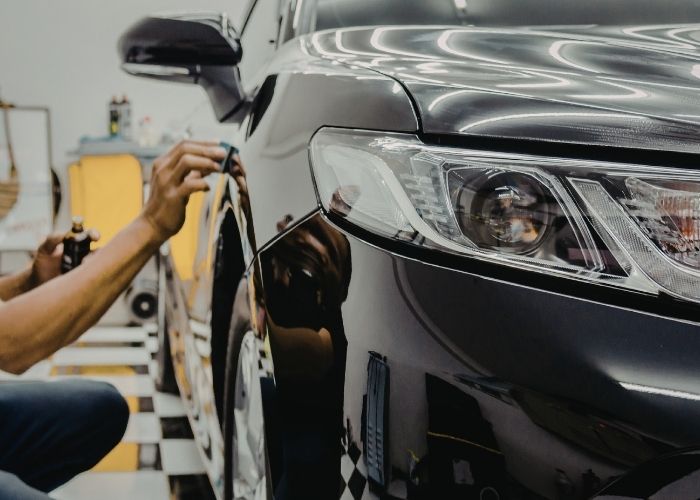
Understanding common pitfalls helps you avoid costly damage to your newly restored vehicle.
1. Waxing Too Early to “Protect” the New Paint
What people do wrong: Applying a heavy coat of carnauba wax or synthetic sealant within days of picking up the vehicle.
Why it’s a problem: Wax creates a non-breathable, hydrophobic film that seals the clear coat before volatile organic compounds (VOCs) can escape. This traps solvents, resulting in tiny pinholes (solvent pop), a milky haze, or loss of paint adhesion.
The right approach: Wait a minimum of 60 to 90 days before applying any wax, synthetic sealant, or ceramic coating.
2. Visiting an Automatic Car Wash
What people do wrong: Taking the car through a convenient drive-thru tunnel wash during the first month.
Why it’s a problem: Spinning brushes and recycled water carry fine road grit from hundreds of trucks and SUVs, creating circular swirl marks and deep micro-marring on the soft finish.
The right approach: Stick strictly to hand washing with clean microfiber mitts and gentle garden hose pressure for the first 30 days.
3. Ignoring Environmental Contaminants
What people do wrong: Leaving bird droppings or tree sap on the hood for a week until the next scheduled wash.
Why it’s a problem: Bird droppings contain highly acidic uric acid (pH 3 to 4.5), which chemically etches into soft, curing clear coat within hours under warm sun.
The right approach: Soften the contaminant immediately by laying a warm, damp microfiber towel over the spot for two minutes, then gently wipe it away without scrubbing.
4 Key Warning Signs to Watch for After Body Shop Repair
While reputable collision centers perform rigorous quality control checks and pre- and post-repair diagnostic scans, you are the person most familiar with your car’s daily handling. Pay close attention to these four critical areas during your first 500 miles on local roads like Route 501, Route 222, and the Lancaster bypass:
1. Steering Alignment and Tracking Pull
On a smooth, level stretch of pavement with zero crosswinds, hold the steering wheel lightly.
Normal Operation: The vehicle tracks straight ahead with the steering wheel centered.
Warning Sign: The vehicle pulls consistently to the left or right, requires continuous steering correction, or exhibits vibration through the steering column at highway speeds (55–65 mph).
2. Cabin Noise and Panel Alignment
Drive at highway speeds with your audio system turned off and listen carefully to the cabin environment.
Normal Operation: A quiet, properly insulated interior free of air leaks.
Warning Sign: Distinct wind whistling around door glass, water droplets seeping past door seals during heavy rain, or panels that rattle over small bumps.
3. ADAS and Electronic Warning Lights
Modern vehicles rely on Advanced Driver Assistance Systems (ADAS) calibrated to millimeter precision.
Normal Operation: All safety alerts (lane departure warnings, adaptive cruise control, rear cross-traffic alert) activate accurately.
Warning Sign: An illuminated check engine light, flashing blind-spot monitor indicators, or dashboard prompts stating “Sensor Blocked” or “System Unavailable.”
4. Paint Surface Anomalies
Inspect your repaired panels in direct, natural sunlight from multiple angles.
Normal Operation: Uniform color match, even clear coat gloss, and consistent metallic flake layout matching adjoining factory panels.
Warning Sign: Paint blistering, tiny solvent pinholes, peeling edges near molding trim, or noticeable clear coat hazing.
Normal Post-Repair Adjustments vs. When to Return Immediately
Not every new sensation indicates a repair failure. Distinguishing normal component break-in from genuine issues helps you make informed decisions:
| NORMAL BREAK-IN | RETURN TO SHOP FOR CHECK |
| Faint smell of heated coating near exhaust (first 20 mi) | Visible fluid leaks under the vehicle engine or body |
| Firm door seals requiring slightly firmer closing | Steering pull or vibration at standard highway speeds |
| Brake pads bedding-in (first 100–200 miles) | Persistent dashboard ADAS or check engine lights |
| Fresh paint odor inside garage for several days | Paint blistering, peeling, or clear coat hazing |
Exhaust Coating Heat Smell: New catalytic converter heat shields or underbody corrosion coatings may emit a faint, warm odor during the first 20 miles as they heat-cycle. This is completely normal and dissipates quickly.
Firm Weatherstripping: New OEM rubber door and trunk seals are firmer than seasoned seals. They may require slightly more force to latch during the first two to three weeks until the rubber compresses to the door frame.
Brake Friction Bed-In: New brake pads and rotors require 100 to 200 miles of moderate city driving to establish an even friction layer.
When to Return Immediately: If you observe fluid pooling on your driveway, sudden loss of brake pedal firmness, clunking suspension noises, or diagnostic warning lights, contact the body shop immediately for a safety inspection.
Lititz Collision Repair Warranty Protection
At Lititz Collision, our commitment to your vehicle does not end when you drive off our lot. We understand that collision repair requires precision craftsmanship, which is why we stand behind our workmanship with warranty coverage.
Our workmanship and paint adhesion are backed by a lifetime warranty. If you notice any paint imperfections, alignment discrepancies, or fitment concerns after your repair, contact us and our team will inspect, adjust, and correct the issue promptly with zero hassle.
Conclusion
Taking proper care of your vehicle during the first 30 days after collision repair preserves your paint finish, ensures mechanical safety, and maintains the value of your car. By hand-washing with gentle techniques, avoiding automated washes and waxes, and monitoring handling and electronics, you allow your fresh finish to cure perfectly while protecting your investment.
If you have any questions about your vehicle’s post-repair care or notice anything unusual during your daily commute, our team is always ready to help.
Serving Lititz, Ephrata, Lebanon, Lancaster, and surrounding Lancaster County areas.
Frequently Asked Questions
How long should I wait to wash my car after collision repair?
You can wash your car immediately by hand using cool water, a mild pH-neutral car wash soap, and a soft microfiber wash mitt. However, avoid automatic car washes, stiff bristle brushes, and commercial high-pressure sprayers for at least 30 days while the clear coat completes its curing cycle.
Why can’t I wax my car immediately after body shop painting?
Fresh automotive clear coat takes 60 to 90 days to outgas solvents completely. Applying wax, polymer sealants, or ceramic coatings creates a non-breathable barrier that traps these evaporating solvents underneath, which can cause paint clouding, blistering, solvent pop pinholes, and loss of paint adhesion.
Is it safe to drive my car in the rain or snow right after repair?
Yes, it is completely safe to drive in rain, snow, or standard weather conditions. The bake cycle in the professional spray booth hardens the paint surface enough to withstand everyday environmental moisture. Just be sure to rinse off abrasive road salt and slush promptly with gentle water pressure.
What should I do if my car pulls to one side after a repair?
If your vehicle pulls to the left or right, or if the steering wheel sits off-center, your suspension alignment or tire pressures require adjustment. Contact the repair facility right away to schedule a computerized alignment check under your repair warranty.
When is it safe to apply ceramic coating or paint protection film (PPF)?
You should wait 60 to 90 days before installing paint protection film (PPF) or applying a professional ceramic coating. This waiting period guarantees that all refinish paint solvents have fully evaporated, ensuring maximum adhesive bonding and preventing clear coat degradation beneath the film.
How do I safely remove bird droppings from fresh paint?
Never scrape or vigorously scrub dry bird droppings from fresh paint. Soak a clean microfiber towel in warm, soapy water, place it over the droppings for two to three minutes to soften the residue, and gently wipe it away in one light stroke. Rinse the area thoroughly with clean water.
What does the Lititz Collision warranty cover?
Lititz Collision offers a lifetime warranty on workmanship and paint adhesion, giving you peace of mind with our repairs.
Related Resources
- How Long Do Collision Repairs Take At Lititz Auto Body Shops
- Why Getting Mechanical and Body Repairs Done at the Same Shop Saves Time, Money, and Headaches
- Lititz Auto Insurance Claims Help Explained
- Collision Repair Estimates: What to Expect Before Service
Sources
I-CAR (Inter-Industry Conference on Auto Collision Repair) — Responsible for Industry technical standards for refinishing, clear coat cross-linking, curing bake cycles, and post-repair quality verification.
National Institute for Automotive Service Excellence (ASE) — More information about The National Institute for Automotive Service Excellence and Their Service Standards